Until You Know It Cold
The first time I watched a large language model generate research output in forty seconds, I was not impressed by the quality. I was impressed by the volume, and by how quickly it could pivot when I changed the question. The results were plausible, competently organized, and largely superficial. What changed things was connecting to Consensus, an academic search tool that surfaces peer-reviewed literature rather than synthesized summaries. That is when quality entered. Before that, the speed was real; what it was producing was not yet the thing.
The deeper shift came later, and from an unexpected direction. For years I had been saving articles, notes, forwarded emails, and clippings to Evernote and Readwise. Thousands of items. Almost none of it was ever actually digested. I would save it, maybe skim it, and it would disappear into an archive I could not meaningfully access. When I built a wiki using a structured ingest skill, that changed. I could scan, synthesize, and interact with material at a level I had never reached before, professionally and personally. The professional enhancement was real. The personal dimension was new entirely. I was finally doing something with thirty years of accumulated reading that I had never been able to do. That was the moment I understood what was actually happening. Not that AI was doing my work. That AI had removed the bottleneck that was preventing my existing work from compounding.
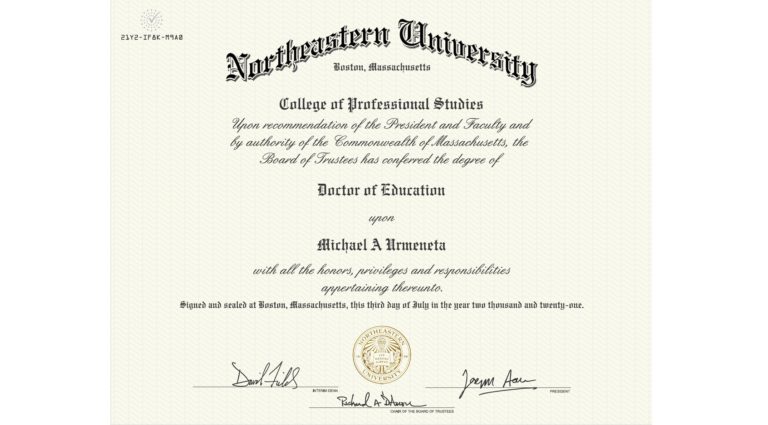
Every doctoral-trained person who reaches that moment is doing the same thing they did to get through the degree. We scan. We speedread. We archive. We look for the connective tissue nobody named yet. We synthesize and present. The dissertation was training in this exact loop, performed once at length, under conditions designed to prove the method was real and not performed. By the time I defended, I had spent three years with my question until I knew it cold. Not just the literature. The shape of the problem, the contested edges, the methodological debates nobody fully resolved. You go into a defense knowing they can ask you anything, go anywhere, and there is no way to predict the direction. What you have, if the formation worked, is saturation. You know it so completely that as long as you hold your central premise and keep your mind focused, it almost does not matter what they ask. Almost. The room still has authority. But by that point it is your question.
You did not get the degree for scanning and connecting. You got it for scanning and connecting in service of a question that matters.
“Matters” is doing enormous work in that sentence, and most of the current conversation about AI and expertise skips past it entirely. To matter is a teleological claim. It implies a direction and a receiver, someone outside yourself to whom the answer is owed. I did not get a doctorate to get a doctorate. I got it because I needed the formation and rigor to pursue a question nobody was answering about first-generation college students and student success, and because that question also answered things in my own history that no one else could provide. Both were real. The professional and the personal were running on the same track. The “so what” was legible to someone other than me, but also to the part of me that needed to know.
That accountability is what the training built. The capacity to stand in front of a room and defend that this question deserved to exist, and that I had become the person capable of answering it. That second part matters more than it sounds. The doctorate did not just certify a method. It made me a different person. I became someone who could do the hard thing, persist through years of difficulty, take what I was curious about and carry it across a finish line. That is not a skill. It is a formation. It is the thing AI cannot replicate, not because the operation is inaccessible, but because formation requires time, resistance, and accountability to something that will not lower its standards to accommodate your fatigue.
The procedural labor used to be expensive enough that we mistook it for the substance. Reading everything, knowing the field by moving through it, that took years, and we credited the years. The model does that labor now, cheaply, at scale. What is left, visible now in a way it was not before, is the formed judgment about what is worth asking and why, and the accountability to someone for whom the answer matters.
This is what the doctorate was always certifying. We can see it now because the rest fell away.
A credential that was partly about demonstrated labor now has to justify itself entirely on judgment and formation. That is harder to defend and harder to transmit, especially in programs that have not yet reckoned with what they are actually producing when the training works. The question before the committee was never a formality. It was always the thing. The model just made that visible by taking everything else off the table.
I can scan faster now. My archive is finally compounding the way it always should have. But the question is still slow. It is still mine to choose. It is still accountable to first-generation students who need someone to see them, and to the questions in my own history that took thirty years and a doctorate to answer. That has not changed, and it is not going to.